
What Is the CRM Process? Key Steps from Lead to Loyalty

CRM process is how businesses turn first contact into long-term customer loyalty.
The CRM (Customer Relationship Management) process is a strategic approach that guides every interaction from the moment a lead appears to the point where that customer becomes a loyal advocate. Yet many teams skip steps, rush follow-ups, or rely on guesswork without realizing what is missing.
So what actually happens inside a CRM process?
Why do some leads convert smoothly while others disappear?
And how do strong businesses move people through the right stages every time?
The answer lies in understanding the CRM stages and the full CRM cycle. Each step has a purpose, and together they form a clear CRM strategy that keeps relationships organized and consistent.
If you want to see how the CRM process works from lead to loyalty, keep reading. We will break down each stage and show how to build a CRM strategy that actually delivers results.
What Are the Key Steps in the CRM Process?
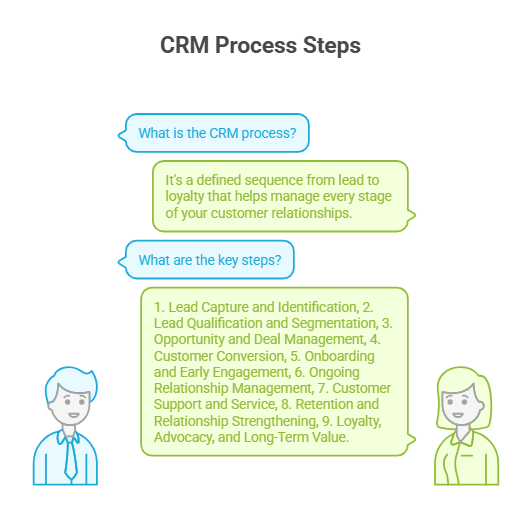
The CRM process follows a defined sequence from lead to loyalty that helps you manage every stage of your customer relationships. You use these steps to organize your team’s efforts and ensure no client feels forgotten. It provides a structured workflow that turns strangers into buyers and buyers into advocates.
Key CRM Process Steps (Lead to Loyalty):
- Lead Capture and Identification
- Lead Qualification and Segmentation
- Opportunity and Deal Management
- Customer Conversion
- Onboarding and Early Engagement
- Ongoing Relationship Management
- Customer Support and Service
- Retention and Relationship Strengthening
- Loyalty, Advocacy, and Long-Term Value
What Does the CRM Process Represent in a Business?
The CRM process represents how a business manages customer relationships over time through a structured operating model. You use it as a guide to ensure your marketing, sales, and support teams work as one unit. It turns your daily activities into a repeatable system that scales as you grow.
You should view this process as a way to build consistency. Without it, your data stays scattered, and your customers get a different experience every time they call. By following a set process, you remove the guesswork from your operations. You know exactly what a lead needs at any given moment. This coordination builds trust with your audience. It makes your company look reliable and professional. You use the process to protect your most valuable asset: your relationships.
How Does Lead Capture and Identification Work in the CRM Process?
Lead capture is the first step where you collect and organize potential customer information to start a new relationship. You use this phase to bring data from your website, social media, or phone calls into your central system. It ensures that you have a formal record of everyone who shows interest in your brand.
You want to make sure no inquiry goes unnoticed. When a person fills out a form, your system should record their name, email, and the reason they reached out. You are not trying to sell to them yet. You are simply identifying who they are and how they found you. This step creates the foundation for everything that follows. If you capture data correctly, you can reach out with the right facts. You stop losing leads in messy inboxes and start building your database from the very first interaction.
What Happens During Lead Qualification and Segmentation?
Qualification determines readiness and fit by assessing which leads are most likely to become successful customers. You use this step to prioritize your time and ensure your sales team focuses on the best opportunities. It involves categorizing your leads based on their needs, budget, and timing.
You do not want to treat every lead the same way. Some people are just looking for information, while others are ready to buy today. By segmenting your leads, you can send the right message to the right person. You might group them by industry or by the specific problem they want to solve. This keeps your communication helpful and personal. You avoid wasting energy on prospects who aren’t a good match for your business. This focus makes your whole process more efficient and leads to higher conversion rates over time.
How Does Opportunity and Deal Management Fit into the CRM Process?
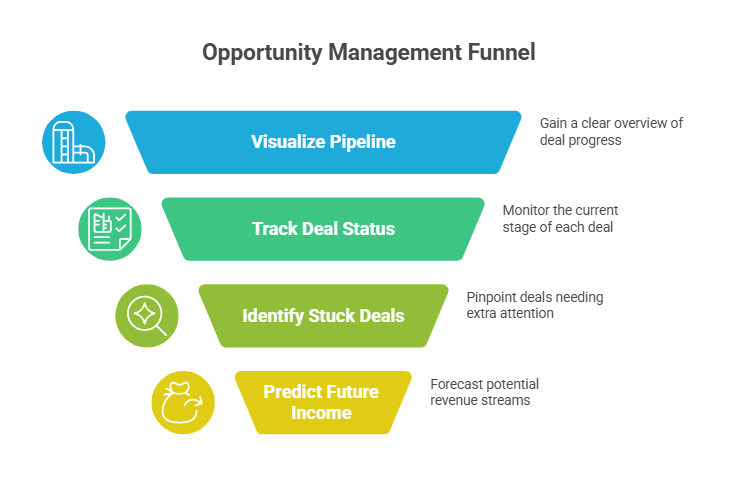
Opportunity management is the stage where you track the progress and potential value of active sales deals. You use this step to visualize your pipeline and see which prospects are moving toward a final decision. It provides the visibility you need to hit your monthly goals and manage your workload.
You focus on the specific steps needed to win a contract. Every opportunity has a status, such as “Proposal Sent” or “Negotiation.” This helps you know what to do when you start your day. You can see which deals are stuck and need extra attention. By tracking your deals this way, you make your future income more predictable. You stop worrying about where your next sale will come from because you can see it moving through your system. It gives you the control needed to run a steady and profitable business.
What Does Customer Conversion Mean in CRM?
Conversion marks the shift from prospect to customer as you formalize the relationship through a completed transaction. You use this step to update your records and signal to your team that the initial sales phase is over. It is the moment when a person commits to your brand and begins their journey as a buyer.
You want to make this transition as smooth as possible. When a deal closes, you update the lead’s status to “Customer.” You record the details of the sale and the promises made during the process. This ensures that your service team knows exactly what the client expects. A successful conversion is more than just a payment; it is a hand-off of trust. You use the CRM to bridge the gap between sales and service. This ensures the customer feels the same level of care after they pay as they did before.
How Does Onboarding Support the CRM Process?
Onboarding is the stage where you set expectations and help your new customer achieve their first success with your brand. You use this phase to provide the resources and guidance needed to ensure the client gets value right away. It is your best chance to prove that you are a reliable partner.
You want to remove any doubt the customer might have after their purchase. By guiding them through the first steps, you build a foundation for long-term loyalty. You show them how to use your product or how your service works. This proactive support prevents early frustration. It shows the client that you care about their results, not just their money. A good onboarding process lowers the chance of someone leaving your brand later. It turns a new transaction into a solid and growing relationship.
What Is Ongoing Relationship Management in CRM?
Relationship management is the continuous effort to maintain communication and provide value throughout the customer lifecycle. You use this step to stay relevant in your client’s life and ensure they remain satisfied with your work. It involves regular check-ins and providing updates that help them reach their goals.
You stop thinking about the sale and start thinking about the partnership. You use your CRM to track when you last spoke and what was discussed. You might send a helpful article or a personalized note on their anniversary with your brand. This consistency builds deep trust over time. You are no longer just a vendor; you are a partner who understands their journey. This ongoing effort is what prevents your customers from looking at your competitors. You keep the relationship fresh and valuable through regular, meaningful interaction.
How Do Customer Support and Service Fit into the CRM Process?
Support and service maintain the quality of your relationships by resolving issues and building trust when problems arise. You use this step to log every request and ensure that no complaint goes unanswered. It provides your team with the full customer history so they can help with speed and accuracy.
You turn a potential negative into a positive for your brand. When a customer has a problem, they want a fast and helpful answer. By having their full story in your CRM, your support team doesn’t have to ask the same old questions. They can jump straight to the solution. This level of service proves that you are a professional and caring company. It reinforces the trust the customer placed in you. Successful service management is a key driver of loyalty because it shows you stand by your promises even when things get difficult.
How Does the CRM Process Drive Retention and Loyalty?
Retention and loyalty are the final outcomes of a consistent CRM process where deep trust leads to repeat business and vocal advocacy. You reach this stage when a customer is so satisfied that they choose to stay with you for years and refer others to your brand.
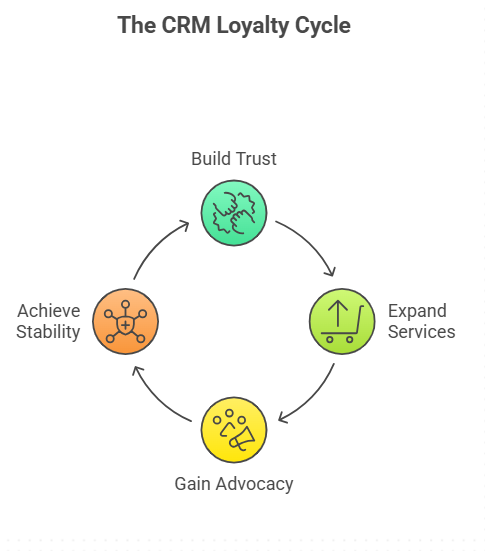
- Trust: Built through consistent and helpful interactions at every step.
- Expansion: Satisfied clients are open to buying more of your services.
- Advocacy: Your best customers become a free sales force for your business.
- Stability: A loyal base provides predictable income that protects your future.
You see the full value of your work here. When you manage the process well, you don’t have to chase new leads as hard. Your current clients provide the growth you need. They write reviews and tell their friends about you. This advocacy is the highest form of success in the CRM process. You have turned a stranger into a partner who actively helps your business grow.
Why Is the CRM Process Important for Business Growth?
The CRM process is important because it provides the consistency and scalability you need to grow your brand without losing quality. You use it to coordinate your teams and ensure that every customer gets a professional experience. It turns your individual efforts into a powerful, data-driven engine for success.
You cannot scale your business if your relationships rely on memory. You need a system that works even when you are busy. The process gives you the facts you need to make smart choices. You see where people are leaving and you fix it. You see where your sales are strong and you double down. This strategic control is what separates a small business from a high-performing operation. You build a company that is predictable, profitable, and ready to serve more people every single day.
What Are the Key Takeaways About the CRM Process?
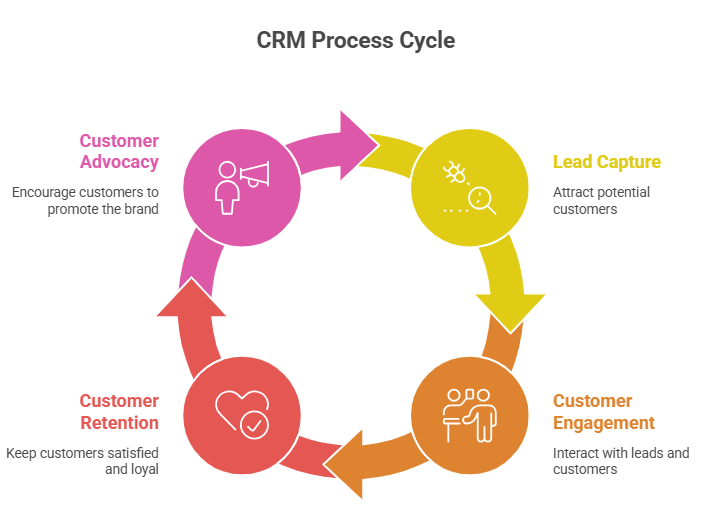
The CRM process is a lifecycle-focused workflow that manages your relationships from first contact to long-term advocacy. By following these steps, you create a professional framework for your team and a seamless experience for your customers. You use this process to build a stable, growing, and customer-centric brand.
- Structure: Follows a clear path from lead capture to loyalty.
- Coordination: Aligns marketing, sales, and support under one goal.
- Consistency: Ensures every customer feels valued and understood.
- Outcome: Leads to higher retention, better service, and vocal advocates.
Is the CRM process the same for every business?
The core steps are usually the same, but the details change. A retail store might have a very fast process, while a consulting firm might take months to move from lead to conversion. You should tailor the steps to fit your actual customer journey.
How does the CRM process relate to the customer lifecycle?
The CRM process is the set of actions you take to manage the customer lifecycle. One is the path the customer takes (lifecycle), and the other is the work you do (process) to influence and support that path.
Can businesses customize the CRM process?
Yes, and you should. You might add a “Trial” step or a “Discovery Call” step depending on your industry. Your process should reflect the real-world interactions you have with your leads and clients every day.
What happens when CRM process steps are skipped?
You lose data and trust. If you skip onboarding, the customer might get confused and leave. If you skip qualification, your sales team will waste time on bad leads. Every step exists to prevent a specific type of failure in the relationship.
Who owns the CRM process inside an organization?
It is a shared effort, but an operations manager or CRM administrator usually sets the rules. Marketing owns the early steps, sales owns the middle, and support owns the later stages. Everyone must follow the same map for the process to work.
How can small businesses implement the CRM process effectively?
Start with the most important steps: capture, follow-up, and service. You don’t need a complex system to begin. Use the process to build good habits first, then use your database to automate and scale those habits as you grow.
Mastering Your Path to Success
You now have the full map of the customer journey in your hands. You see that your business is not just about the sale; it is about the process of building trust. You must use these steps to ensure your brand stays professional and your customers stay loyal.
Your next step is to look at your current workflow. Where are you missing a step? Do you have a plan for onboarding? Do you track your support calls? If not, start by adding one new step this week. Once you have a complete process, you will see your team become more focused and your sales become more predictable. You have the power to turn every new lead into a lifelong fan. Start mastering your CRM process today and watch your business stability grow.