
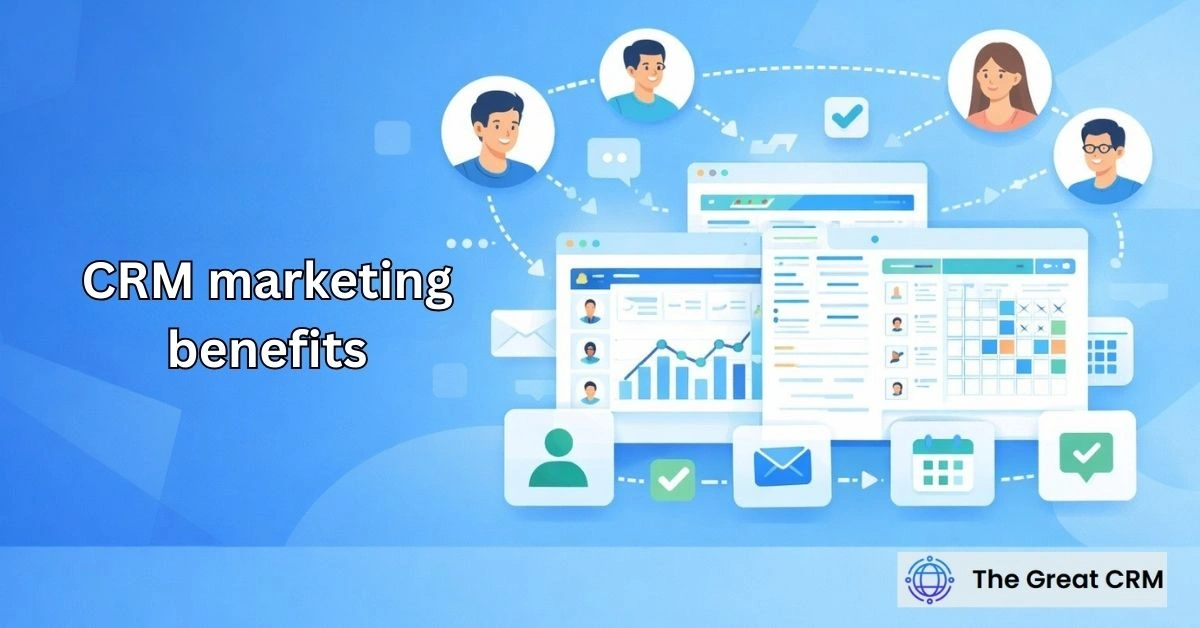
CRM Marketing Benefits: How CRM Improves Campaign Performance

CRM improves marketing performance by connecting campaign activity to customer and lead data, providing a unified view of the entire customer lifecycle. By housing marketing initiatives within the same system that manages sales and service records, organizations can ensure that every outreach effort is informed by real-world customer context. This structural integration allows businesses to move beyond broad-based messaging toward data-driven strategies that are measurable and highly relevant.
This approach transforms the CRM into a strategic hub for growth. Rather than operating in a vacuum, marketing teams gain direct visibility into how their efforts influence pipeline generation and revenue. By utilizing customer data for marketing, companies can improve the precision of their targeting and the overall efficiency of their revenue operations.
What Are CRM Marketing Benefits?
CRM marketing benefits refer to how customer relationship management systems help marketing teams improve campaign effectiveness and performance. These advantages are gained when marketing teams use CRM data and capabilities to plan, execute, and evaluate their initiatives within a centralized architecture.
By utilizing crm for marketing, organizations can bridge the gap between initial awareness and final conversion. The primary benefit lies in the ability to treat marketing not as an isolated function, but as an integrated part of the customer journey. This leads to better coordination, higher engagement rates, and a clearer understanding of the return on investment for every campaign launched.
Why Is CRM Important for Marketing Performance?
CRM is important for marketing performance because it provides a unified view of leads and customers across campaigns. In a fragmented digital landscape, having a “single source of truth” allows marketing teams to see the full history of a prospect’s interactions with the brand.
This campaign visibility is critical for maintaining professional standards and preventing overlapping or conflicting messages. When marketing performance is measured through the lens of a CRM, it shifts the focus from superficial metrics, like clicks or impressions, to meaningful business outcomes, such as lead quality and opportunity creation. This alignment ensures that marketing efforts are always contributing to the company’s broader growth objectives.
How Does CRM Improve Audience Targeting?
CRM improves audience targeting by organizing customer and lead data into structured segments. By leveraging the rich information stored in contact records—such as industry, purchase history, geographic location, and previous engagement—marketing teams can create highly specific lists for their outreach.
Effective customer segmentation ensures that the right message reaches the right person at the optimal time. CRM audience targeting moves beyond basic demographics and allows for behavior-based selection. For example, a team can target a campaign specifically at customers who haven’t made a purchase in six months but have recently viewed a pricing page, ensuring the message is both timely and relevant to the recipient’s current needs.
How Does CRM Improve Campaign Planning?
CRM improves campaign planning by aligning audiences, objectives, and timelines around shared customer data. During the planning phase, the CRM serves as a historical archive, allowing marketers to review past performance data to inform current strategies.
This level of marketing coordination ensures that campaign goals are grounded in reality. By using crm campaign planning tools, teams can define target outcomes and associate specific budgets and owners with each initiative. This structured approach prevents the “silo effect” and ensures that every campaign has a clear place within the overall marketing calendar, reducing internal competition for the same audience’s attention.
How Does CRM Support Campaign Execution?
CRM supports campaign execution by tracking campaign activity and linking it to leads and contacts. While it is not an execution engine itself, the CRM acts as the record-keeper for every touchpoint delivered through other channels.
Through crm campaign execution tracking, the system records which individuals were included in a campaign and how they were contacted. This campaign tracking is vital for multi-stage initiatives, as it allows the team to see exactly where each prospect stands. This transparency ensures that execution is consistent across the team and that every recipient’s experience is documented for future reference.
How Does CRM Improve Campaign Tracking and Attribution?
CRM improves campaign tracking by connecting campaign activity to leads, opportunities, and customer records. This linkage allows for precise marketing attribution, moving the conversation from “how many people saw this?” to “which deals did this campaign help close?”
By utilizing crm campaign tracking, businesses can see the full path a lead takes from their first interaction to the final sale. This visibility into the lifecycle allows marketers to identify “multi-touch” influence, showing how various campaigns work together over time to move a prospect through the funnel. This data is essential for proving the value of marketing efforts and making informed decisions about future budget allocations.
How Does CRM Improve Lead Quality and Follow-Up?
CRM improves lead quality by giving sales teams visibility into marketing engagement history. When a lead is passed to sales, the rep doesn’t start from scratch; they can see exactly which campaigns, content, and topics the prospect has already engaged with.
This marketing to sales alignment significantly increases the efficiency of the follow-up process. By providing crm lead quality indicators—such as specific links clicked or webinars attended—marketing gives sales the “talking points” needed for a warm, informed outreach. This reduces the friction of the handoff and ensures that high-intent leads are prioritized and managed with the appropriate context.
How Does CRM Support Sales and Marketing Alignment?
CRM improves sales and marketing alignment by providing a shared view of campaign and lead activity. It eliminates the data silos that often cause friction between these two departments, replacing anecdotal evidence with shared, objective data.
In a sales marketing alignment crm environment, both teams are working toward the same revenue goals using the same set of records. Marketing can see which of their leads are converting into deals, and sales can see which marketing initiatives are warming up their target accounts. This mutual visibility fosters a culture of shared accountability and ensures that both teams are pulling in the same direction to drive business growth.
How Does CRM Improve Campaign Insights and Decision-Making?
CRM improves campaign insights by showing how different campaigns influence leads and customers. By looking at the aggregate results of various initiatives, marketing teams can perform a sophisticated campaign performance analysis.
These crm marketing insights allow for continuous optimization. Marketers can identify patterns in what works—such as which content types drive the most qualified leads or which segments respond best to specific offers. This data-driven approach removes the guesswork from decision-making, allowing leadership to invest more heavily in high-performing channels while phasing out those that don’t produce a measurable return.
What CRM Features Contribute Most to Marketing Performance?
CRM marketing performance relies on features that connect campaigns to customer and lead data. These crm marketing features provide the infrastructure needed to manage complex data relationships and surface them as actionable reports.
Key contributors to performance include:
- Campaign Records: Centralized hubs for defining, tracking, and reporting on specific initiatives.
- Member Status Tracking: The ability to see who responded, who attended, and who converted within a campaign.
- Lead Source Fields: Automatically capturing the origin of every new lead for attribution.
- Activity Timelines: A visual history of all marketing, sales, and service touchpoints on a single record.
- Campaign Reporting: Pre-built or custom dashboards that show ROI, pipeline influence, and conversion rates.
How Is CRM Marketing Different From Marketing Automation?
CRM marketing differs from marketing automation by focusing on tracking and insight rather than automated delivery. In the crm vs marketing automation comparison, the CRM is the database and system of record, while the automation tool is the engine used to send emails or manage social posts.
The CRM is where the strategic planning happens and where the final results are measured against sales data. Automation tools excel at high-volume delivery and workflow triggers, but they lack the full sales and service context found in a CRM. For a truly effective crm marketing strategy, organizations typically use the CRM to coordinate and track the efforts executed by their automation platforms.
What Are Common Use Cases for CRM in Marketing?
CRM is commonly used in marketing to track campaign impact across the customer lifecycle. These crm marketing use cases highlight the versatility of the system in managing various types of professional outreach.
Typical scenarios include:
- Lead Generation Campaigns: Tracking the effectiveness of webinars, whitepapers, and contact forms.
- Product Launches: Coordinating multi-channel outreach and monitoring interest levels among existing customers.
- Event Management: Recording registrations and post-event follow-up activities for trade shows and seminars.
- Lifecycle Marketing: Managing “welcome” series, “renewal” reminders, and “win-back” campaigns for inactive leads.
- Account-Based Marketing (ABM): Tracking engagement within high-value target accounts to support strategic sales efforts.
What Are the Benefits of CRM for Marketing Teams?
CRM benefits marketing teams by improving visibility into campaign performance and outcomes. It moves marketing from being a “cost center” to a “revenue driver” by providing the data needed to prove its impact.
A crm marketing benefits summary includes:
- Enhanced Visibility: A clear view of how every campaign is performing in real-time.
- Better Coordination: Seamless alignment with sales and other customer-facing departments.
- Increased Accountability: The ability to measure success based on revenue rather than vanity metrics.
- Deep Insight: A better understanding of customer behavior and preferences over the long term.
- Operational Efficiency: Reducing manual data entry and fragmented reporting through centralization.
What Challenges Limit CRM Marketing Benefits?
CRM marketing benefits can be limited by inconsistent data and usage practices. These crm marketing challenges often stem from the human side of the technology—if data isn’t entered correctly or if the team doesn’t adopt the system, the insights become unreliable.
Common hurdles include:
- Poor Data Quality: Duplicate records or missing contact information making targeting difficult.
- Lack of Attribution Discipline: Failure to associate leads or opportunities with the correct campaign records.
- Limited User Adoption: Marketing teams sticking to separate spreadsheets instead of the shared CRM.
- Technical Complexity: If the system is too difficult to update, the data will quickly become outdated.
When Does CRM Deliver the Most Marketing Value?
CRM delivers the most marketing value when campaigns influence multiple stages of the customer journey. For businesses with long sales cycles, high-value deals, or complex buyer committees, the need for when to use crm for marketing is paramount.
In these environments, a single lead might interact with the brand dozens of times before buying. The CRM is the only tool capable of tracking this journey over months or even years. As the complexity of the sales process increases, the value of the CRM’s historical record and attribution capabilities grows exponentially, making it the essential foundation for any sophisticated marketing operation.
How Should Businesses Evaluate CRM Marketing Capabilities?
Businesses should evaluate CRM marketing capabilities based on insight quality and alignment with revenue processes. A crm marketing evaluation should focus on how easily a marketer can answer the question: “How did this campaign contribute to our revenue?”
Evaluation criteria should look for:
- Attribution Clarity: How easily can opportunities be linked to marketing activities?
- Ease of Use: Is it simple for marketing teams to create campaigns and add members?
- Reporting Depth: Does the system provide the specific metrics (like cost per lead or pipeline influence) that the team needs?
- Integration: How well does it “talk” to the sales pipeline and other execution tools?
What Are the Key Takeaways About CRM Marketing Benefits?
CRM improves marketing campaign performance by connecting activity to customer and lead outcomes. It is the vital link that turns marketing from a creative exercise into a data-driven business discipline.
- Definition: CRM marketing benefits is explained as the advantages of data centralization and lifecycle tracking.
- Targeting: Improves relevance through sophisticated crm marketing summary segments.
- Alignment: Bridges the gap between marketing effort and sales results.
- Measurement: Provides the foundation for accurate attribution and ROI analysis.
- Strategic Value: Enables leadership to make informed decisions based on revenue impact rather than engagement alone.
Is CRM Useful for Marketing Without Automation Tools?
Yes, CRM is highly useful for marketing coordination even without automation. It provides the essential structure for manual outreach, event tracking, and attribution, ensuring that all marketing activities are documented and tied to sales outcomes, which automation tools alone cannot do.
Can CRM Improve Campaign ROI Measurement?
Yes, by linking campaign spend and activity directly to closed-won opportunities, a CRM provides the most accurate way to calculate return on investment. It allows businesses to see exactly which marketing dollars resulted in actual revenue, rather than just estimated interest.
Does CRM Help With Customer Retention Campaigns?
Yes, CRM data is vital for retention efforts. By monitoring purchase history and service interactions, marketing teams can identify at-risk customers and trigger personalized re-engagement campaigns to improve loyalty and reduce churn throughout the customer lifecycle.
How Does CRM Support Multi-Channel Campaigns?
CRM acts as the “connective tissue” for multi-channel efforts. It records every interaction—whether from social, email, or physical events—in one central record, ensuring that the marketing team has a complete view of how a prospect is engaging across all platforms.
Is CRM Marketing Only for Large Teams?
No, CRM marketing is beneficial for teams of all sizes. For small teams, the primary value is efficiency and organization—ensuring that limited marketing resources are focused on the highest-value opportunities and that no lead is lost due to a lack of tracking.
What Data Is Required to Realize CRM Marketing Benefits?
To realize these benefits, you need accurate contact information, clearly defined campaign records, and a consistent process for linking leads to their original sources. Without these foundational data points, the attribution and insight capabilities of the CRM cannot function effectively.