
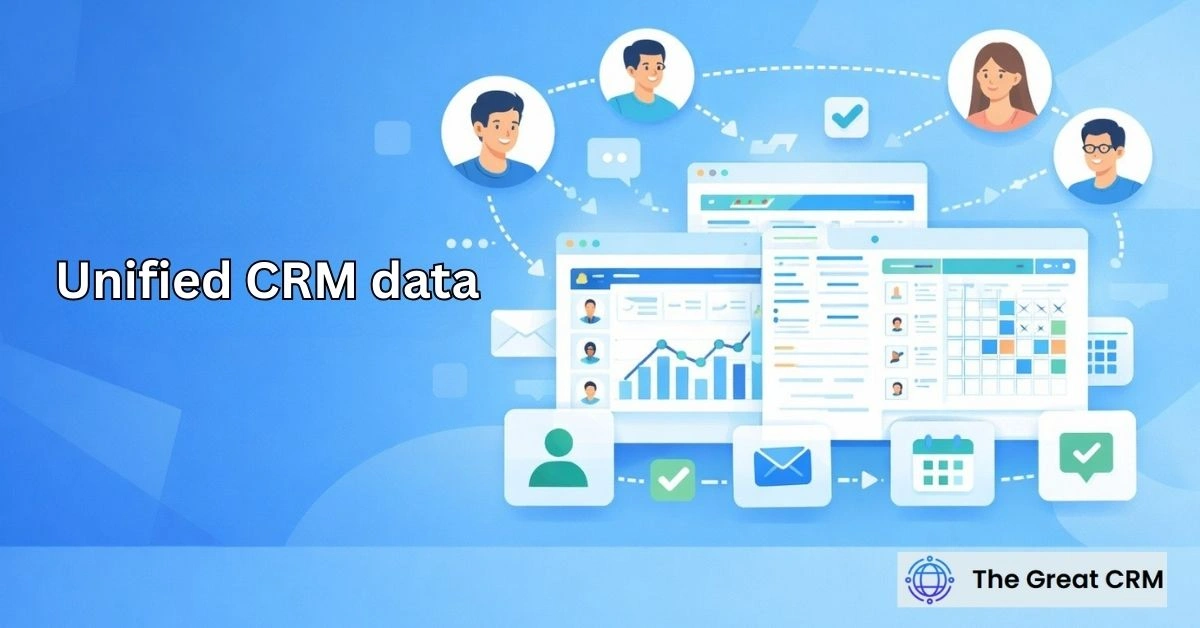
Unified CRM Data: Creating a Single Source of Customer Truth

Unified CRM data refers to consolidated customer information that creates a single, consistent view of each customer across systems and teams. You likely find that as your organization grows, customer information becomes trapped in departmental silos—sales has one set of notes, support has another, and billing has a third. This fragmentation leads to miscommunication and missed opportunities. By pursuing unified crm data, you move toward a strategy where every department operates from the same playbook. It is about establishing a single source of customer truth that ensures your business interactions are always informed, professional, and perfectly aligned with the customer’s actual history.
What Is Unified CRM Data?
Unified CRM data refers to consolidated customer information that creates a single, consistent view of each customer across systems and teams. It is the outcome of a deliberate effort to align disparate data points—such as contact details, purchase history, and communication logs—into a centralized record. By achieving unified crm data, you ensure that the “truth” about a customer remains the same whether you are looking at a sales dashboard or a service ticket.
This concept represents a shift from managing data in isolation to managing it as a cohesive asset. It acts as the digital connective tissue of your organization, ensuring that a change made in one system (like a new phone number or an updated job title) is reflected everywhere. When you adopt this approach, you are prioritizing organizational clarity, ensuring that your single source of truth is not just a theoretical goal but a practical reality that guides every daily interaction.
Why Does a Single Source of Customer Truth Matter?
A single source of customer truth matters because teams rely on consistent customer data to make accurate decisions. In a fast-paced business environment, having trusted customer data is the only way to ensure that your outreach is relevant and your strategies are sound. When data is unified, the risk of acting on outdated or conflicting information is significantly reduced, allowing for much higher operational confidence.
Maintaining customer data consistency also builds internal trust. When a sales rep knows that the data in the CRM matches the data in the billing system, they can communicate with clients more confidently. This alignment prevents the “data friction” that occurs when teams spend more time arguing about which number is correct than they do solving customer problems. It creates a baseline of accuracy that is essential for any professional organization aiming for high-level coordination.
What Problems Exist Without Unified CRM Data?
Without unified CRM data, organizations face fragmented customer records and inconsistent information. This often manifests as data silos, where different departments hold different “versions” of the same customer. For example, marketing might send a promotion to a client that support is currently trying to appease after a major service failure, leading to an insensitive and unprofessional brand experience.
Furthermore, fragmented customer data leads to massive administrative waste. Staff spend hours manually reconciling spreadsheets or verifying information across multiple platforms. This lack of unification creates “blind spots” in the customer journey, making it impossible to see the full impact of your efforts. Ultimately, without a unified view, the customer feels the disorganization, resulting in repetitive conversations and a general sense that the company doesn’t truly “know” them.
What Types of Data Are Unified in CRM Systems?
Unified CRM data brings together multiple types of customer-related information to create a holistic profile. This crm data consolidation typically includes basic identity data, such as names and addresses, alongside deeper layers of engagement history. By unifying these customer data types, you provide your team with the full narrative of the relationship rather than just a snapshot of a single transaction.
- Identity Data: Verified names, emails, job titles, and social handles.
- Account Data: Firmographics like company size, industry, and corporate hierarchy.
- Interaction History: A chronological log of every email, call, and meeting.
- Transactional Data: Purchase history, contract terms, and renewal dates.
- Behavioral Signals: Website visits, content downloads, and product usage patterns.
How Is Customer Data Unified Across Systems?
Customer data is unified by aligning records and resolving inconsistencies across connected systems. This process of customer data alignment involves identifying “unique identifiers”—such as an email address or a corporate tax ID—to bridge the gap between different software platforms. It requires a high-level data unification process where the “system of record” for specific data points is clearly defined.
Conceptually, this unification is about reconciliation. If the billing system says a customer is “Active” but the CRM says they are a “Prospect,” the unification process determines which status is correct and updates both systems accordingly. This ensures that the data is not just moved from place to place but is actually validated and synchronized. It turns a collection of disparate apps into a single, intelligent ecosystem where information flows without contradiction.
How Does Unified CRM Data Support Sales Teams?
Sales teams benefit from unified CRM data by having a complete and accurate view of prospects and customers. This unified customer view allows sales reps to enter conversations with total context. They can see if a lead has recently engaged with a marketing campaign or if an existing client has an open support ticket, allowing them to tailor their approach with much greater precision.
Access to accurate sales crm data also improves pipeline management. When deal data is unified with actual product usage or billing status, forecasts become much more reliable. Reps spend less time hunting for information and more time on high-value activities. It transforms the salesperson from a cold-outreach solicitor into an informed consultant who understands the customer’s current needs and historical challenges.
How Does Unified CRM Data Support Marketing Teams?
Marketing teams use unified CRM data to segment audiences and deliver consistent messaging. Effective customer segmentation relies on having a reliable set of data points to filter by. When marketing crm data is unified, you can create highly specific lists, such as “Customers who have bought Product A but haven’t interacted with Support in 90 days.”
This level of unification also powers professional-grade personalization. Instead of sending generic emails, marketing can trigger messages based on real-world events across the lifecycle. Because the data is unified, the marketing team can be certain that their “personalization” is accurate, avoiding the common mistakes of using old job titles or promoting products the customer has already purchased. It makes the marketing feel like a natural extension of the personal relationship.
How Does Unified CRM Data Support Service and Support Teams?
Service teams rely on unified CRM data to provide informed and consistent customer support. When a customer reaches out with a problem, immediate access to customer support records is what prevents frustration. It allows the support agent to see not just the current ticket, but the sales history and the original promises made during the onboarding process.
Utilizing service crm data in this way ensures that resolutions are reached faster. Agents don’t have to ask the customer to repeat their history because the “single source of truth” provides it instantly. This informed service delivery builds trust and demonstrates that the company values the customer’s time. It turns a support interaction from a defensive troubleshooting session into a proactive relationship-building moment.
How Does Unified CRM Data Improve Customer Experience (CX)?
Unified CRM data improves customer experience by enabling consistent and personalized interactions. In the world of the unified customer experience, data is the engine that removes friction. When a customer moves from marketing to sales to service, they shouldn’t feel the “seams” of your organization; the conversation should feel continuous.
By utilizing customer experience data to reduce repetition, you respect the customer’s journey. They feel “known” by the brand, which is the foundation of long-term loyalty. Whether it’s a support agent acknowledging a recent purchase or a sales rep knowing about a past service issue, these informed touchpoints prove that the company is paying attention. It transforms a series of transactions into a cohesive, professional relationship.
What Role Does Data Quality Play in Unified CRM Data?
Unified CRM data depends on high data quality to remain reliable and useful. You cannot unify “dirty” data and expect a clean result; in fact, unifying poor-quality information often amplifies the problem across the organization. Maintaining clean customer data is the essential prerequisite for any unification strategy, as the “single source of truth” is only valuable if the information it holds is accurate.
Improving crm data quality involves focusing on completeness, consistency, and timeliness. If a record is missing a critical unique identifier, it cannot be safely unified with other systems. Therefore, data hygiene is not a one-time project but a continuous standard of excellence. When quality is prioritized, the unified view becomes a powerful asset; when it is neglected, the unified view becomes a source of strategic risk and user distrust.
How Do Businesses Govern Unified CRM Data?
Unified CRM data requires governance to ensure consistency and accountability. Data governance crm involves setting the rules for how data enters the system, who is allowed to change it, and which system is the “master” for specific fields. Without clear customer data ownership, the unified record can quickly become cluttered or contradictory as different teams apply different standards.
Effective governance ensures that data remains professional and usable. It involves establishing validation rules—such as standardizing how phone numbers or addresses are entered—to prevent duplicates during the unification process. By assigning responsibility for specific data segments, businesses ensure that the “single source of truth” is actively maintained and protected, rather than being left to decay over time.
How Is Unified CRM Data Different From a CDP or Data Warehouse?
Unified CRM data differs from CDPs and data warehouses by focusing on active customer relationships. While the comparison of crm vs cdp is common, the distinction is one of intent. A CRM is an operational tool designed for daily engagement and “handshakes” with known customers. A CDP, by contrast, is often used to aggregate anonymous behavioral data from many sources to build a broader marketing profile.
Similarly, in crm vs data warehouse, the CRM is about real-time action, whereas the warehouse is about historical analysis and massive data mining. The “truth” in a CRM is meant to be used by a salesperson now to close a deal or by a support agent now to solve a problem. Unified CRM data is the operational heartbeat of the company, while the warehouse and CDP provide the long-term analytical memory.
What Are Common Use Cases for Unified CRM Data?
Unified CRM data is commonly used to support customer-facing and operational workflows. There are dozens of unified crm data use cases that demonstrate how a single view of the customer improves business performance. By applying this data to your daily routines, you ensure that your organization remains organized and proactive at every stage of the lifecycle.
- Lead to Cash Management: Tracking a prospect from the first marketing click through the final invoice.
- Proactive Account Management: Identifying which high-value accounts have low engagement across sales and service.
- Customer Health Scoring: Combining support ticket volume with product usage data to predict churn.
- Coordinated Renewals: Ensuring sales reps are aware of recent service wins before discussing contract extensions.
- Accurate Revenue Forecasting: Basing projections on validated data from both the sales pipeline and the finance system.
What Are the Benefits of Unified CRM Data?
The benefits of unified CRM data come from having consistent and reliable customer information. You gain a level of unified crm data benefits that directly impacts your team’s productivity and your brand’s reputation. When your information is aligned, you spend less time sifting through contradictory notes and more time executing on your growth goals.
- Improved Team Coordination: Sales, marketing, and service all work from the same profile.
- Faster Response Times: Staff find the information they need in seconds, not hours.
- Higher Data Trust: Teams stop keeping “private” spreadsheets and start trusting the system.
- Reduced Operational Costs: Automation and synchronization eliminate manual data entry errors.
- Enhanced Strategic Clarity: Leadership makes decisions based on the actual state of the customer base.
What Challenges Exist in Creating a Single Source of Customer Truth?
Creating a single source of customer truth presents organizational and data challenges. One of the primary data unification challenges is overcoming the “territorial” nature of departmental data. Sales may be reluctant to share their notes, or finance may be protective of their billing records. Overcoming these silos requires strong leadership and a shared understanding of the value of unification.
Technical customer data challenges also exist, such as dealing with legacy systems that don’t easily sync with modern CRMs. Furthermore, maintaining the unification requires constant discipline. If team members start bypassing the system or entering “dirty” data, the single source of truth quickly becomes a single source of confusion. Success requires a culture that views the CRM as the “only truth” and a continuous commitment to data hygiene and governance.
When Should Businesses Prioritize Unified CRM Data?
Businesses should prioritize unified CRM data as customer data becomes spread across systems and teams. You should consider when to unify crm data based on the friction in your customer interactions. If your customers are complaining about having to repeat themselves, or if your sales and service teams are constantly out of sync, you have already reached the point where unification is a necessity.
It is also a priority during periods of rapid scale. Scaling a business with fragmented data is like building a house on a shifting foundation; the cracks will eventually cause the structure to fail. Implementing a unified data strategy early provides the “operational rails” needed to handle growth without a proportional increase in administrative chaos, ensuring that your customer experience remains professional even as your volume increases.
How Should Businesses Evaluate Their Unified CRM Data Strategy?
Businesses should evaluate unified CRM data strategies based on trust, usability, and cross-team alignment. A successful unified crm data evaluation starts with asking your frontline staff if they trust the information they see in the system. If they are still maintaining separate spreadsheets “just in case,” your unification strategy has not yet reached its goal.
- Accuracy Audit: What percentage of your customer records are consistent across all systems?
- User Adoption: Are all departments actively using and updating the CRM?
- Inquiry Reduction: Has the volume of “internal status” questions decreased?
- Decision Impact: Are your forecasts and strategic plans proving to be more accurate over time?
- Customer Feedback: Are clients noticing a more seamless and informed experience?
What Are the Key Takeaways About Unified CRM Data?
Unified CRM data creates a single, trusted view of customers across the organization. It provides the unified crm data explained framework needed to move from a reactive, siloed culture to a proactive, aligned one. By utilizing this single source of truth summary, you can build a more responsive, efficient, and customer-centric organization.
- Consolidation: Move away from disparate spreadsheets to a shared system of record.
- Alignment: Ensure sales, marketing, and service are looking at the same map.
- Trust: Prioritize data quality to ensure the unified view is reliable.
- Coordination: Use the unified view to eliminate handoff errors and repetitive tasks.
- Strategy: Base executive decisions on a validated and holistic view of the customer.
Is Unified CRM Data the Same as a Single Customer View?
Unified CRM data and a Single Customer View (SCV) are effectively the same concept, though “Unified Data” focuses more on the operational state and the backend alignment of systems. Both terms describe the goal of having one consistent, holistic record for every customer that is accessible across the entire organization. Achieving a Single Customer View is the result of a successful unified CRM data strategy, ensuring that the “truth” about a relationship is never fragmented or contradictory.
Who Owns the Single Source of Customer Truth?
Ownership of the single source of customer truth is often a shared responsibility managed by a Revenue Operations (RevOps) or Data Governance team. While the sales team owns the “discovery” data and the service team owns the “resolution” data, the RevOps team ensures that these pieces are aligned and standardized. This centralized ownership prevents departmental silos from forming and ensures that the standards for data quality and consistency are maintained across the entire business lifecycle.
Can Unified CRM Data Exist Across Multiple Systems?
Yes, unified CRM data can exist across multiple systems provided they are synchronized in real-time or through regular, automated reconciliations. You do not necessarily need to have all your data in one single software application, but you do need all your applications to “agree” on the core customer facts. The “unification” is a state of consistency and alignment, not necessarily a physical relocation of all data points into a single database.
How Often Should Unified CRM Data Be Reviewed?
Unified CRM data should be subject to continuous automated monitoring and formal quarterly reviews. Because data “decays” naturally—people change jobs, companies merge, and email addresses expire—the single source of truth requires constant maintenance. A quarterly audit allows you to identify systemic issues in your data collection or synchronization processes, ensuring that the unified record remains a professional and reliable asset for your team’s daily operations.
Does Unified CRM Data Improve Reporting Accuracy?
Yes, unified CRM data significantly improves reporting accuracy by eliminating the “data noise” caused by conflicting records. When your reports are based on a validated and consolidated set of information, you no longer have to worry about duplicate entries or mismatched statuses skewing your results. This leads to much more reliable forecasts, more accurate revenue tracking, and a clearer understanding of your customer lifetime value (LTV).
What Happens When Customer Data Is Not Unified?
When customer data is not unified, the business suffers from operational friction, inconsistent customer experiences, and strategic blindness. Departments work at cross-purposes, such as sales pitching an upgrade to a customer who is currently experiencing a major technical failure. This lack of alignment damages brand trust, increases administrative costs, and makes it impossible for leadership to get a clear and accurate picture of the company’s true performance or future potential.
Final Thought
Successfully leading a modern business is a direct result of how well you manage your information. Unified CRM data is not just a technical project; it is a fundamental pillar of organizational health. It transforms your company from a collection of individuals into a coordinated team, all moving toward the same goals with the same understanding of the customer. While the path to a single source of truth requires discipline, leadership, and a commitment to data quality, the reward is a business that is more agile, more responsive, and better equipped to build lasting, high-value relationships. If you stay committed to the process of unification, you will find that your data becomes your most powerful competitive advantage.