

Tech Ideas That Made the Web Move Quicker


The web became faster because of a series of smart innovations working together. Broadband replaced slow dial-up connections. Content delivery networks brought data closer to users. HTTP/2 and HTTP/3 improved how browsers talk to servers. Caching, compression, edge computing, and mobile networks like 5G all played a part too. These tech ideas that made the web move quicker did not happen all at once. They built on each other over decades, turning a slow and frustrating experience into the fast, reliable web we use today.
The Early Web Was Painfully Slow
Think back to the 1990s. Loading a single webpage with a few images could take 30 to 60 seconds. Dial-up internet ran at just 56 Kbps, which is about 18,000 times slower than today’s gigabit fiber connections. That is not a typo.
The early web had several problems working against it at the same time:
- Every file had to load one at a time, in order
- Web servers handled all requests from a single location
- Images and files were not compressed before being sent
- Browsers had very basic rendering engines that were slow to display content
- Mobile internet did not exist yet
The result was a web that felt like waiting in a very long queue just to read one paragraph of text. The good news is that engineers, companies, and developers worked hard to fix every one of these problems. Here is how they did it.
What Are the 14 Tech Ideas That Made the Web Move Quicker?
The innovations that transformed internet speed did not come from one place. Some tackled the physical infrastructure like cables and connections. Others changed how browsers and servers communicate. A few focused on shrinking the size of data being sent. And others brought servers physically closer to the people using them.
Here is a quick overview before we dig into each one:
| Technology | What It Does | Key Benefit |
|---|---|---|
| Broadband Internet | Faster physical connections | Higher bandwidth |
| Content Delivery Network (CDN) | Distributes content globally | Reduced latency |
| Web Caching | Saves previously loaded files | Fewer repeat downloads |
| Data Compression (Gzip/Brotli) | Shrinks file sizes | Faster data transfer |
| HTTP/2 and HTTP/3 | Better server-browser communication | Multiple files at once |
| AJAX | Loads page elements without full reload | Smoother user experience |
| Cloud Computing | Distributed server infrastructure | Better uptime and scale |
| Edge Computing | Processes data near the user | Lower real-time latency |
| JavaScript Engines (V8) | Faster script execution | Snappier web apps |
| 5G and Mobile Networks | Faster wireless connections | Better mobile web speed |
| Core Web Vitals | Performance benchmarking | SEO and UX improvement |
| WebAssembly (WASM) | Near-native browser performance | Complex apps in the browser |
1. Broadband Internet: The Speed Revolution That Started Everything
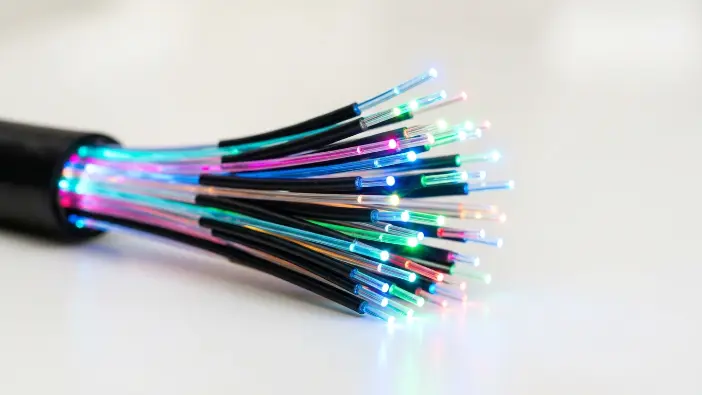
Broadband was the first big breakthrough. It replaced dial-up connections that required you to physically use your phone line to connect to the internet. Early broadband through DSL and cable delivered speeds ranging from 256 Kbps to 1 Mbps. That was a massive jump at the time.
Then came fiber optic internet, which can now reach speeds over 1 Gbps. Fiber works by sending data as pulses of light through glass cables, which is far faster than sending electrical signals through copper wire.
Broadband also introduced always-on connectivity. You no longer needed to dial in and wait. This change alone opened the door for every other innovation on this list. Without fast, stable connections, CDNs, cloud computing, and streaming services would have no foundation to build on.
Today, broadband internet is the baseline that everything else depends on.
2. Content Delivery Networks(CDN): Serving the Web From Everywhere

Imagine ordering food from a restaurant on the other side of the world. Now imagine that same restaurant had a local branch two streets from your house. That is basically what a Content Delivery Network does for websites.
A CDN distributes copies of website files across servers in multiple locations around the world. When you visit a website, you receive the content from the server that is closest to you geographically. This reduces the distance data has to travel, which lowers latency and speeds up page load times.
CDNs are used by major platforms including Cloudflare and Akamai. They power streaming services, e-commerce stores, news sites, and cloud-based business tools including CRM platforms. Without CDNs, a user in Bangladesh accessing a website hosted in New York would face significantly slower load times than a user in New Jersey accessing the same site.
Content Delivery Networks (CDNs) technology was one of the most important technological ideas that made the web move faster at scale.
3. Web Caching: Why Browsers Remember What You Have Already Loaded

Every time you visit a website for the first time, your browser downloads its files including CSS stylesheets, JavaScript files, images, and fonts. Web caching tells your browser to save those files locally so it does not need to download them again on your next visit.
There are three main types of caching that work together:
- Browser caching: Saves files on your local device for faster return visits
- Server caching: Stores pre-built page responses on the server to avoid re-processing every request
- Edge caching: Saves content at CDN edge nodes so nearby users get faster responses
Caching is one of the simplest yet most powerful web performance optimization techniques in use today. It reduces bandwidth usage, lowers server load, and makes repeat visits feel nearly instant. For websites with high traffic, caching is not optional. It is essential.
4. Data Compression: Sending Less to Load More

Every file sent from a web server to your browser takes up bandwidth. Larger files take longer to transfer. Data compression solves this by shrinking file sizes before they are sent, then decompressing them on the other end so the user never notices a difference.
Two compression formats power most of the web today:
- Gzip has been used since the early days of the web and remains widely supported
- Brotli is a newer format developed by Google that compresses files more efficiently than Gzip, especially for text-based files like HTML, CSS, and JavaScript
A file that is 100 KB uncompressed might be only 30 KB after Brotli compression. That is 70% less data being transferred across the network. Multiply that by millions of daily page loads and the impact on overall internet speed is enormous. Data compression is a quiet hero among the technologies that improved web performance.
5. HTTP/2 and HTTP/3: The Protocol Upgrades That Rewired the Web

HTTP is the communication protocol that browsers and servers use to exchange data. The original version, HTTP/1.1, had a serious limitation: it could only handle one request at a time per connection. If a page had 20 files to load, the browser had to wait in line for each one.
What HTTP/2 Changed
HTTP/2 solved this with multiplexing. It allowed multiple files to travel over a single connection at the same time. It also introduced header compression and server push, which let servers send files to browsers before they were even requested. Load times dropped significantly for most websites after HTTP/2 was adopted.
How HTTP/3 and QUIC Went Further
HTTP/3 went even further. It is built on the QUIC protocol, which runs on UDP instead of TCP. This matters because UDP does not require the same back-and-forth connection handshake that TCP does. The result is faster connections, especially on unstable or mobile networks where packets are frequently dropped.
Google created the QUIC protocol, and Cloudflare was among the first to deploy it at scale. Today, HTTP/3 is supported by all major browsers including Google Chrome, Safari, and Mozilla Firefox.
6. AJAX: How Web Pages Learned to Update Without Reloading

Before AJAX, loading new content on a webpage meant reloading the entire page. Clicking a button would wipe the screen and reload everything from scratch. This was slow and frustrating.
AJAX stands for Asynchronous JavaScript and XML. It allows a webpage to send and receive data from a server in the background without refreshing the whole page. You see this technology in action every day without realizing it.
- Gmail loads new emails without refreshing the page
- Google Maps updates your route smoothly as you move
- Real-time sales dashboards in CRM platforms update your pipeline data without a reload
- Social media feeds add new posts dynamically while you scroll
AJAX was a turning point in web development. It transformed websites from static documents into interactive, real-time applications. Modern CRM dashboards and live customer data tools rely heavily on AJAX-style asynchronous loading to deliver smooth, responsive experiences.
7. Cloud Computing: From One Server to a Global Network

In the early days of the web, every website lived on a single physical server. If that server went down or got too much traffic, the website went down too. This was a fragile and slow architecture.
Cloud computing changed everything. Instead of relying on one machine in one location, cloud platforms distribute websites and applications across many servers in data centers around the world. Companies like AWS and Google Cloud manage this infrastructure so businesses do not have to.
The benefits for web speed are significant:
- Servers can automatically scale up during traffic spikes
- Data is replicated across multiple regions for faster global access
- Downtime from hardware failure is dramatically reduced
- Software updates and patches happen without taking the site offline
For SaaS tools and CRM platforms, cloud computing is the foundation. A cloud-based CRM serves thousands of users simultaneously without performance drops because the load is spread across a distributed infrastructure rather than one overloaded machine.
8. Edge Computing: Processing Data Closer to You
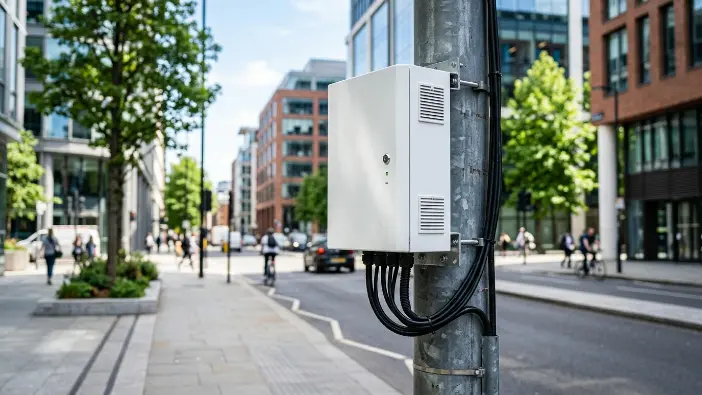
Cloud computing moved infrastructure off single servers and onto distributed networks. Edge computing took that idea one step further by moving processing power as close to the user as physically possible.
Instead of sending every request to a central data center hundreds of miles away, edge computing processes data at servers near the user. This reduces the time it takes for data to travel, which is called latency.
Edge computing is especially important for real-time applications:
- Live video streaming
- Online gaming
- IoT device communication
- Real-time analytics dashboards in business software
Tools like AWS Lambda@Edge and Cloudflare Workers allow developers to run code at the network edge, right next to users. For modern CRM platforms that display live customer data and real-time sales metrics, edge computing is part of what makes those near-instant updates possible.
9. Browser Rendering Engines: The Hidden Speed Machines

Even if a server sends data at lightning speed, something still needs to turn that raw code into a visual webpage. That job belongs to the browser rendering engine.
Each major browser has its own engine:
- Blink powers Google Chrome and handles the majority of web traffic worldwide
- WebKit powers Apple Safari and is optimized for Apple hardware
- Gecko powers Mozilla Firefox with a focus on open standards
Modern rendering engines use GPU acceleration to speed up visual processing. They run layout calculations, paint graphics, and composite layers in parallel rather than one step at a time. This makes pages feel smoother and more responsive.
Improvements in browser rendering engines over the past decade have been just as important as network-level changes. A faster pipe delivering data to a slow renderer would not result in a fast user experience.
10. JavaScript Engines and JIT Compilation: Why Web Apps Feel Native

JavaScript runs in the browser and controls most of the interactive behavior on modern websites. In the early days, JavaScript was interpreted line by line, which was slow for complex operations.
Modern JavaScript engines like V8 (used in Google Chrome) and SpiderMonkey (used in Mozilla Firefox) use a technique called Just-in-Time (JIT) compilation. Instead of interpreting code one line at a time, JIT compilation converts JavaScript into machine code while the program is running. This makes execution dramatically faster.
The impact is noticeable. Web applications that would have needed a desktop installation a decade ago now run smoothly inside a browser tab. Complex data tools, spreadsheet editors, video editors, and real-time dashboards all depend on the speed improvements that modern JavaScript engines deliver.
11. Mobile Networks: From 3G to 5G and Beyond

Web speed is not only about what happens on servers. It also depends on how fast data travels wirelessly to phones and tablets. The evolution of mobile networks has been one of the biggest tech ideas that made the web move quicker for billions of people.
| Network Generation | Era | Typical Speed |
|---|---|---|
| 2G | Late 1990s | 0.2 Mbps |
| 3G | Early 2000s | 1 to 7 Mbps |
| 4G LTE | 2010s | 10 to 50 Mbps |
| 5G | 2020s | 100 Mbps to 1+ Gbps |
3G made basic mobile web browsing possible. 4G LTE made mobile video streaming reliable. 5G delivers speeds of over 1 Gbps with ultra-low latency, which makes the mobile web nearly as fast as wired fiber connections.
For mobile-first users in developing markets, each network upgrade has been transformational. The web did not just get faster on desktops. It got faster everywhere.
12. Core Web Vitals: When Web Speed Became an SEO Ranking Signal

For a long time, web speed was seen as a technical concern. Google changed that in 2021 when it made Core Web Vitals an official search ranking signal. Suddenly, page speed became a business problem too.
Core Web Vitals measure three key user experience factors:
- Largest Contentful Paint (LCP): How quickly the main content of a page becomes visible
- Interaction to Next Paint (INP): How fast the page responds to user clicks and inputs
- Cumulative Layout Shift (CLS): How much the page layout jumps around while loading
Users expect websites to load in under 3 seconds. Pages that are slower have significantly higher bounce rates. Google’s ranking algorithm rewards pages that pass all three Core Web Vitals thresholds and penalizes those that do not.
For business websites and CRM software platforms, Core Web Vitals are not just performance metrics. They are directly connected to search visibility, user trust, and conversion rates.
13. Modern Image Formats: Smaller Files, Same Visual Quality

Images have always been one of the heaviest parts of any webpage. Large, unoptimized images slow down page load time even when everything else is optimized well.
Modern image formats solve this problem:
- WebP, developed by Google, delivers the same visual quality as JPEG at roughly 25 to 35% smaller file sizes
- AVIF is even newer and compresses images more aggressively than WebP while preserving sharpness and color quality
- Lazy loading ensures images only download when a user scrolls close enough to actually see them
Switching from PNG or JPEG to WebP or AVIF on a content-heavy website can shave hundreds of kilobytes from a single page load. When combined with CDNs and browser caching, image optimization contributes meaningfully to a faster, lighter web experience.
14. WebAssembly: Near-Native Performance Inside the Browser

WebAssembly, often written as WASM, is one of the newer tech ideas making waves in web performance. It allows developers to run code inside a browser at speeds close to what a native desktop application can achieve.
JavaScript is fast, but it has limits. For computationally heavy tasks like video editing, 3D rendering, or processing large datasets, JavaScript can struggle. WebAssembly bypasses those limits by allowing code written in languages like C++, Rust, or Go to run directly in the browser at near-native speed.
What this means in practice:
- Complex data visualization tools run smoothly inside a browser tab
- In-browser video editors and design tools feel as fast as desktop software
- Advanced scientific and engineering applications no longer need desktop installations
WebAssembly is still growing, but it represents one of the most exciting web performance optimization techniques shaping the next generation of web applications.
How These Technologies Work Together
None of these technologies work in isolation. The fast web you experience every day is the result of multiple layers working together at the same time. Here is what happens in the background when you click a link and a page loads in under a second:
- Your DNS request resolves quickly because of optimized Anycast DNS routing that finds the nearest server
- A CDN node near you responds instead of a distant origin server, cutting travel time dramatically
- HTTP/3 over QUIC opens a fast connection with minimal handshake delay, even on mobile networks
- Compressed files (Brotli or Gzip) arrive at your browser weighing a fraction of their original size
- Your browser’s rendering engine (Blink, WebKit, or Gecko) parses and renders content using GPU acceleration
- Cached static files skip the download entirely because your browser already saved them from a previous visit
- AJAX loads dynamic content like live data or personalized elements without triggering a full page reload
The result of all seven steps happening simultaneously is a webpage that appears in the browser in one or two seconds, no matter where you are in the world. This layered speed architecture is the real story behind the tech ideas that made the web move quicker.
Why Web Speed Still Matters in 2025 and 2026
Web speed is not a solved problem. It is an ongoing priority. User expectations keep rising. Business outcomes keep depending on it more directly.
Nearly 60% of all Google searches now result in zero-click outcomes, meaning users get their answers directly on the search results page. This makes it even more important that pages which do get visited load fast enough to hold attention and drive action.
For businesses using web-based tools like CRM platforms, sales dashboards, and customer portals, slow load times translate into real costs:
- Longer time-to-insight for sales teams reviewing live pipeline data
- Higher bounce rates on lead capture pages
- Lower search visibility due to poor Core Web Vitals scores
- Reduced trust from customers accessing self-service portals
The companies that invest in web performance optimization are not just improving user experience. They are protecting revenue, improving SEO rankings, and ensuring their tools remain competitive in a world where speed is a baseline expectation, not a luxury.
New developments in 2025 and 2026 are pushing web performance further. AI-driven optimization tools now automate image delivery and predictive prefetching. Edge AI is being integrated directly into CDN platforms. WebAssembly is expanding into server-side use cases. The web keeps getting faster, and the tech ideas driving that progress keep evolving.
Final Thoughts
The internet you use today is the result of decades of engineering breakthroughs. Broadband gave speed a foundation. CDNs eliminated geographic barriers. HTTP/2 and HTTP/3 rewired how browsers and servers communicate. AJAX made pages interactive. Cloud computing and edge computing distributed the load globally. Browser engines and JavaScript engines made web apps feel native. And 5G brought all of that speed to mobile devices worldwide.
Understanding these technologies helps you make smarter decisions about the tools your business depends on. Fast, reliable web infrastructure is not just a developer concern. It directly affects how well your CRM performs, how your team accesses data, and how your customers experience your brand online.
If you are evaluating web-based business tools that need to perform reliably at speed, exploring the right CRM platform is a smart next step. Check out our guide to the best CRM software for small business to find a platform built on modern, fast web infrastructure that keeps up with your team.